All Posts By

prosumersolar

Battery Prices Are Falling & Why This Is Reshaping Energy Systems (Not Just Costs)

By Battery

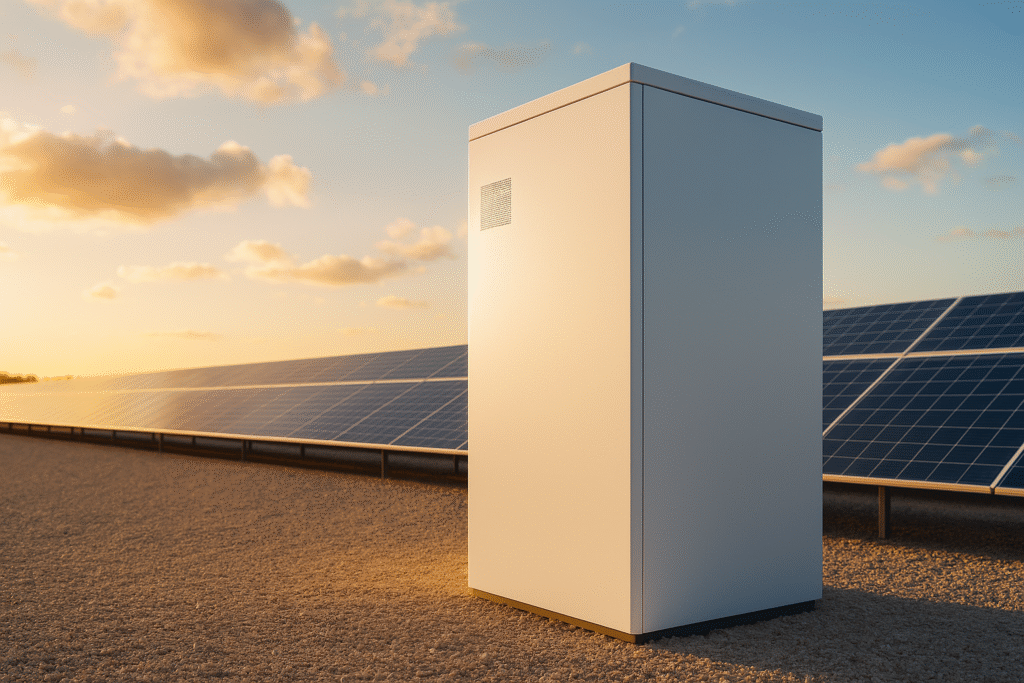
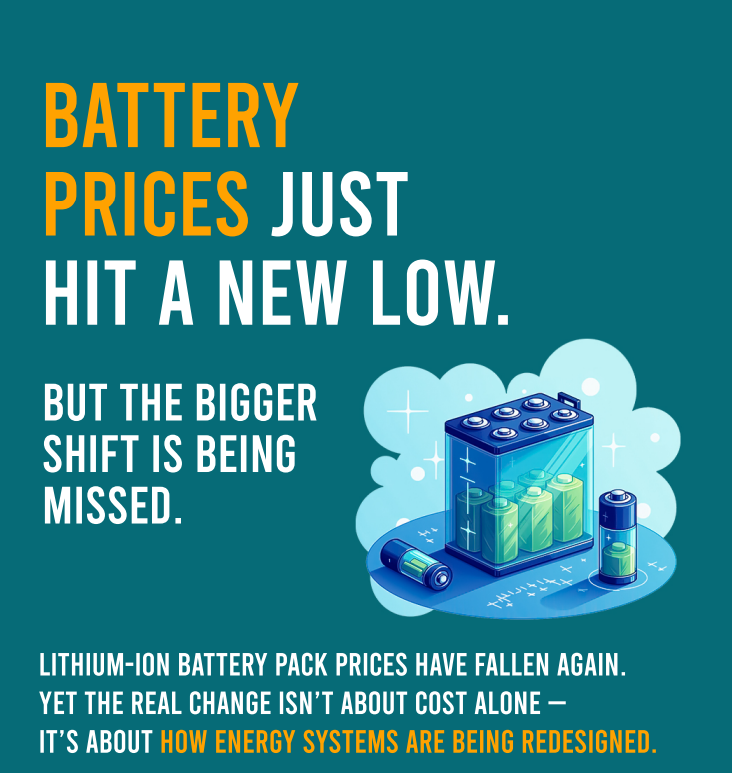
Lithium-ion battery prices have reached a new milestone. According to recent industry analysis, average battery pack prices have fallen to around $108 per kWh, with stationary energy storage now emerging as the lowest-cost segment.

At first glance, this looks like a pricing story.

In reality, it is something much bigger.

From working closely with solar power systems, battery storage integration, and long-term energy planning, one thing is clear:
falling battery prices are not just reducing costs — they are changing how energy systems are designed, owned, and operated.
Battery Prices Falling Is Not New — But This Phase Is Different

Battery costs have been declining for over a decade, driven largely by electric vehicle demand. What makes the current phase different is where the lowest prices are now appearing.

Stationary storage systems:

  • Are no longer constrained by weight or size
  • Prioritise cost per kWh over energy density
  • Are optimised for long cycle life and reliability

This shifts batteries from being a premium add-on to becoming core infrastructure.

How Energy Systems Were Traditionally Designed

For decades, most commercial and industrial facilities followed a familiar model:

  • Depend heavily on the electricity grid
  • Use diesel generators for backup
  • Absorb peak demand charges and tariff volatility
  • Treat power reliability as a recurring operating cost

Energy planning was reactive.
Backup systems were installed only after outages or failures occurred.

What Changes When Storage Becomes Affordable

As battery storage crosses critical cost thresholds, a structural shift begins.

Instead of asking “How do we respond to outages?”, system designers can ask:
“How do we engineer reliability into the system from the start?”

Affordable storage enables:

  • Solar + storage systems that reduce grid dependency
  • Predictable peak-load management
  • Reduced reliance on diesel generators
  • Better long-term energy cost visibility

Energy moves from being a cost centre to a strategic asset.

Why Battery Price Alone Does Not Guarantee Success

In real-world deployments, lower battery prices do not automatically produce better outcomes.

Performance depends heavily on:

  • Correct system sizing
  • Accurate load-profile analysis
  • Thermal management design
  • Control logic and integration with solar and grid

From experience, many underperforming storage projects fail not because batteries were expensive, but because systems were poorly designed or incorrectly applied.

Batteries are not plug-and-play appliances.
They are long-life infrastructure assets.

What This Means for Businesses and Institutions

For commercial and industrial users, declining storage costs unlock meaningful opportunities:

  • Improved energy resilience
  • Reduced exposure to grid volatility
  • Higher utilisation of solar assets
  • More predictable operating expenses

However, the real advantage goes to organisations that treat storage as part of an integrated energy system, not a standalone product.

System-Level Impact: Grids, Cities, and Decentralisation

At scale, affordable stationary storage has broader implications:

  • Smoother peak demand profiles
  • Better renewable energy integration
  • Reduced strain on grid infrastructure
  • Increased resilience at the local level

This is how decentralised energy systems mature — through disciplined engineering, not just falling prices.

The Risk of Rapid Adoption Without Discipline

Rapid cost declines can also introduce new risks.

Without proper planning and standards, we see:

  • Oversized or undersized systems
  • Safety compromises
  • Shortened battery lifespans
  • Assets that fail to meet performance expectations

As storage adoption accelerates, engineering discipline becomes more important, not less.

The Real Takeaway

Falling battery prices are an enabler — not a guarantee.

They expand what is technically and economically possible, but long-term value is created only when systems are designed responsibly, integrated intelligently, and monitored consistently over time.

The future of energy storage will not be decided by price curves alone.
It will be decided by how well technology is translated into real-world systems.

Final Perspective

Battery storage is moving from the margins of energy planning to its centre.

As this transition accelerates, organisations that prioritise system design, performance, and lifecycle thinking will benefit most — while those chasing low prices alone may struggle with underperforming assets.

Technology opens the door.
Engineering determines what happens next.

The Carbon Credit Ecosystem Explained — A Practitioner’s Perspective from the Ground Up

By Carbon Credit

Carbon credits are increasingly used in corporate sustainability strategies, ESG reporting, and climate commitments. Yet in practice, very few decision-makers truly understand where carbon credits come from, how integrity is created, and why so many projects fail to deliver lasting value.

Having worked closely with renewable energy project design, implementation, and long-term performance, one thing becomes clear very quickly:

Carbon markets don’t fail because of trading mechanisms.
They fail when project fundamentals are weak.

This article explains the carbon credit ecosystem from the ground up, through the lens of real energy projects, not financial abstractions.

Carbon Credits Do Not Begin in Markets — They Begin with Projects

A carbon credit represents a quantified reduction or avoidance of greenhouse gas emissions. That reduction does not occur in a registry or exchange. It occurs on site, through assets that operate daily for years.

In practice, credible carbon credits originate from projects such as:

  • Grid-connected and captive renewable energy systems
  • Methane capture and destruction facilities
  • Industrial efficiency upgrades
  • Carefully designed nature-based interventions

If a project does not deliver verifiable, long-term performance, no amount of certification can compensate for that weakness later.

Where Integrity Is Actually Decided (And Why This Stage Is Often Rushed)

In real-world project work, the most decisive phase occurs long before credits are issued.

Critical questions must be answered honestly:

  • What is the true baseline scenario?
  • Would this project exist without carbon finance?
  • Is the chosen technology reliable over decades?
  • Can performance be monitored without manipulation?

From experience, projects that over-promise at this stage almost always create downstream problems — ranging from underperformance to credibility loss.

This is why engineering discipline matters more than paperwork.

The Role of Auditors: Necessary, But Often Misunderstood

Independent auditors play a vital role in the ecosystem, but their responsibility is often overstated.

Auditors:

  • Verify reported data
  • Check methodology compliance
  • Validate monitoring systems

What they cannot do is fix a poorly designed project.

In practice, verification confirms reality — it does not create it. This distinction is essential when assessing credit quality.

Registries and Standards: Structure Without Impact Creation

Standards and registries exist to:

  • Certify eligible projects
  • Issue credits
  • Ensure traceability
  • Prevent double counting

They provide structure and transparency, which are necessary for scale. However, they do not influence how well a project performs on the ground.

This is why strong governance must begin before registry engagement, not after.

Markets, Exchanges, and Brokers: Amplifiers of Quality — or Risk

Markets improve access and liquidity, but they also magnify systemic weaknesses.

In practice, many carbon market challenges stem from:

  • Aggressive crediting assumptions
  • Limited buyer scrutiny
  • Oversupply of low-quality credits
  • Policy uncertainty across jurisdictions

Markets don’t inherently destroy trust — they expose what they are fed.

Why Renewable Energy Projects Offer a Stronger Foundation

From an engineering and operational standpoint, renewable energy projects — when designed conservatively — offer several advantages:

  • Emission reductions are directly measurable
  • Technology performance is predictable
  • Monitoring is continuous and auditable
  • Projects align naturally with grid decarbonisation

This makes them one of the most defensible project categories within carbon markets — provided quality is prioritised over volume.

The Human Dimension: Why Communities Matter More Than Reports

Projects that ignore local participation rarely sustain legitimacy.

In practice, long-term success depends on:

  • Community engagement
  • Transparent benefit sharing
  • Local capacity building

Without these, even technically sound projects face resistance, reputational risk, and operational instability.

What High-Integrity Carbon Ecosystems Require in Reality

Across credible projects, common patterns emerge:

  • Conservative engineering assumptions
  • Transparent performance monitoring
  • Disciplined buyers focused on quality
  • Clear accountability across stakeholders

Carbon credits work best when treated as a financing support mechanism, not a substitute for real decarbonization.

Final Reflection

Carbon credits are neither inherently good nor bad. They are tools.

Their effectiveness depends entirely on how honestly projects are designed, implemented, and monitored over time.

As practitioners in renewable energy learn quickly, integrity cannot be added later — it must be engineered from the start.

Download the Visual Guide

To complement this explanation, you can download our Carbon Credit Ecosystem visual guide (PDF), which simplifies the entire flow into a clear, decision-ready format.

Battery Management System (BMS) monitoring solar battery performance – Prosumers Solar

Battery Management System (BMS): Ensuring Safe and Optimal Battery Performance

By Blog

In the ever-changing field of renewable energy and electric mobility, Battery Management Systems (BMS) play a crucial role in ensuring safety, efficiency, and performance. Whether in solar energy storage systems, EV charging setups, or hybrid power plants, the BMS acts as the brain of every battery system, monitoring and controlling its operation to maximize lifespan and reliability.

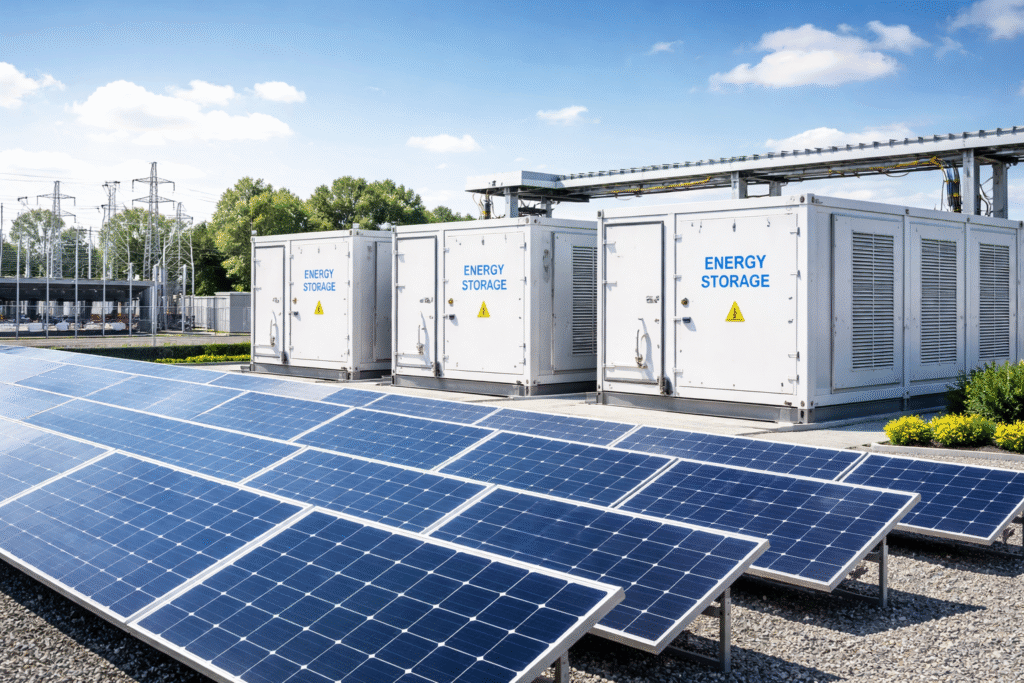
At Prosumers Solar, we integrate BMS technology into our Battery Energy Storage Systems (BESS) to provide safe, efficient, and long-lasting energy performance for both industrial and commercial clients.

What is a Battery Management System (BMS)?

A Battery Management System (BMS) is an electronic control unit that continuously monitors a battery’s operating conditions, including voltage, temperature, current, and state of charge (SoC). Its main goal is to keep the battery operating within safe limits while maintaining the best energy conversion efficiency.

A well-designed BMS ensures:

  • Protection against overcharging, over-discharging, and short circuits
  • Balancing of individual cells in a battery pack for uniform performance
  • Thermal management to prevent overheating and degradation
  • Real-time monitoring for accurate system diagnostics and reporting

How Does a BMS Work?

The BMS serves as a data collection and control center for the battery system. It gathers information from sensors placed on each cell or module and uses algorithms to calculate important parameters, such as:

  • State of Charge (SoC): Measures how much energy remains in the battery
  • State of Health (SoH): Evaluates the battery’s long-term condition
  • Depth of Discharge (DoD): Indicates how much of the stored energy is used
  • Round Trip Efficiency (RTE): Compares energy input to output efficiency

If the BMS detects any issues, it can automatically isolate faulty cells, trigger alarms, or shut down the system to prevent failures or fire hazards.

Why is BMS Important in Solar and Energy Storage Systems?

In solar and hybrid power plants, batteries are essential for energy reliability. Without a proper management system, these batteries can degrade faster, leading to energy losses, downtime, or safety risks. Here’s why a BMS is critical for solar EPC and BESS solutions:

  • Improved Safety: Prevents thermal runaway, overcurrent, and voltage spikes.
  • Longer Battery Life: Maintains consistent operating parameters, extending battery lifespan by up to 40%.
  • Optimized Energy Output: Ensures balanced charging and discharging for higher round-trip efficiency.
  • Predictive Maintenance: Provides data analysis to predict and prevent potential failures.
  • System Integration: Communicates with inverters, SCADA systems, and cloud monitoring platforms.

Applications of BMS in Renewable Energy

  • Solar Power Plants: Manages large-scale energy storage for grid stability.
  • EV Charging Networks: Regulates fast-charging batteries at public and commercial stations.
  • Hybrid Microgrids: Facilitates smooth energy transitions between solar, wind, and battery systems.
  • Industrial Facilities: Ensures uninterrupted power for critical operations through stored energy.

Key Components of a BMS

  • Voltage and Temperature Sensors: For real-time data collection.
  • Microcontrollers and Communication Circuits: For control logic and data exchange.
  • Balancing Circuits: Equalize charge across cells to prevent imbalance.
  • Safety Relays: Disconnect damaged cells or modules in emergencies.
  • Software Interface: Displays performance metrics and fault alerts.

Future of BMS Technology

The next generation of BMS is driven by AI and connected to the cloud. Machine learning algorithms are used to predict battery degradation, optimize charge cycles, and improve system reliability. Prosumers Solar is investing in these smart BMS integrations to create intelligent solar and storage ecosystems that respond to usage patterns and environmental conditions, ensuring maximum safety, performance, and return on investment.

Conclusion

A Battery Management System is not just a control unit; it’s the intelligence that protects and optimizes the entire battery ecosystem. In the clean energy revolution, Prosumers Solar’s advanced BMS solutions ensure that every watt of stored energy is delivered safely and efficiently. If you’re looking to design a reliable solar energy storage system, talk to our experts and learn how BMS can improve your project’s performance.