
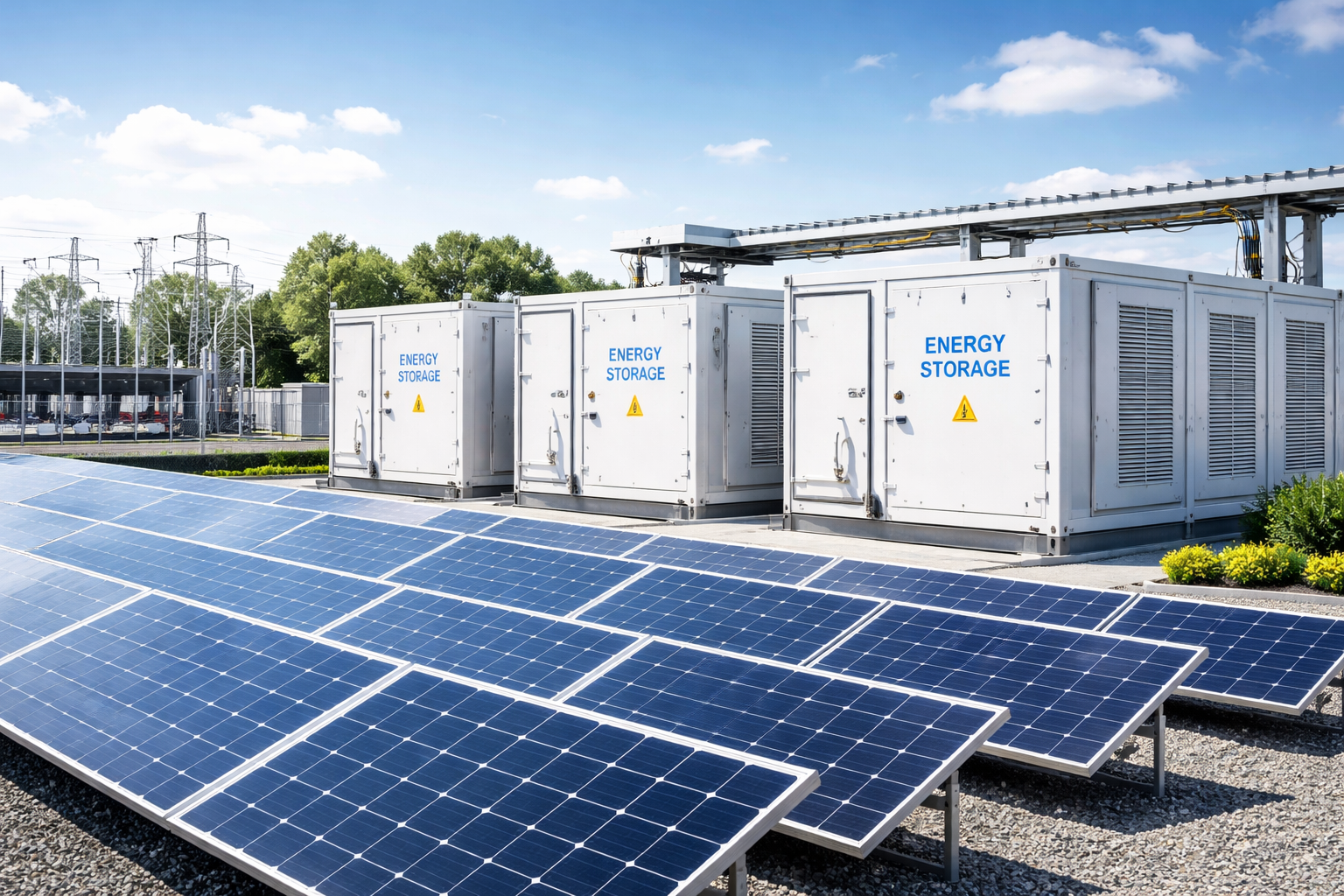
Lithium-ion battery prices have reached a new milestone. According to recent industry analysis, average battery pack prices have fallen to around $108 per kWh, with stationary energy storage now emerging as the lowest-cost segment.
At first glance, this looks like a pricing story.
In reality, it is something much bigger.
From working closely with solar power systems, battery storage integration, and long-term energy planning, one thing is clear:
falling battery prices are not just reducing costs — they are changing how energy systems are designed, owned, and operated.
Battery Prices Falling Is Not New — But This Phase Is Different
Battery costs have been declining for over a decade, driven largely by electric vehicle demand. What makes the current phase different is where the lowest prices are now appearing.
Stationary storage systems:
- Are no longer constrained by weight or size
- Prioritise cost per kWh over energy density
- Are optimised for long cycle life and reliability
This shifts batteries from being a premium add-on to becoming core infrastructure.
How Energy Systems Were Traditionally Designed
For decades, most commercial and industrial facilities followed a familiar model:
- Depend heavily on the electricity grid
- Use diesel generators for backup
- Absorb peak demand charges and tariff volatility
- Treat power reliability as a recurring operating cost
Energy planning was reactive.
Backup systems were installed only after outages or failures occurred.
What Changes When Storage Becomes Affordable
As battery storage crosses critical cost thresholds, a structural shift begins.
Instead of asking “How do we respond to outages?”, system designers can ask:
“How do we engineer reliability into the system from the start?”
Affordable storage enables:
- Solar + storage systems that reduce grid dependency
- Predictable peak-load management
- Reduced reliance on diesel generators
- Better long-term energy cost visibility
Energy moves from being a cost centre to a strategic asset.
Why Battery Price Alone Does Not Guarantee Success
In real-world deployments, lower battery prices do not automatically produce better outcomes.
Performance depends heavily on:
- Correct system sizing
- Accurate load-profile analysis
- Thermal management design
- Control logic and integration with solar and grid
From experience, many underperforming storage projects fail not because batteries were expensive, but because systems were poorly designed or incorrectly applied.
Batteries are not plug-and-play appliances.
They are long-life infrastructure assets.
What This Means for Businesses and Institutions
For commercial and industrial users, declining storage costs unlock meaningful opportunities:
- Improved energy resilience
- Reduced exposure to grid volatility
- Higher utilisation of solar assets
- More predictable operating expenses
However, the real advantage goes to organisations that treat storage as part of an integrated energy system, not a standalone product.
System-Level Impact: Grids, Cities, and Decentralisation
At scale, affordable stationary storage has broader implications:
- Smoother peak demand profiles
- Better renewable energy integration
- Reduced strain on grid infrastructure
- Increased resilience at the local level
This is how decentralised energy systems mature — through disciplined engineering, not just falling prices.
The Risk of Rapid Adoption Without Discipline
Rapid cost declines can also introduce new risks.
Without proper planning and standards, we see:
- Oversized or undersized systems
- Safety compromises
- Shortened battery lifespans
- Assets that fail to meet performance expectations
As storage adoption accelerates, engineering discipline becomes more important, not less.
The Real Takeaway
Falling battery prices are an enabler — not a guarantee.
They expand what is technically and economically possible, but long-term value is created only when systems are designed responsibly, integrated intelligently, and monitored consistently over time.
The future of energy storage will not be decided by price curves alone.
It will be decided by how well technology is translated into real-world systems.
Final Perspective
Battery storage is moving from the margins of energy planning to its centre.
As this transition accelerates, organisations that prioritise system design, performance, and lifecycle thinking will benefit most — while those chasing low prices alone may struggle with underperforming assets.
Technology opens the door.
Engineering determines what happens next.