
Carbon credits are increasingly used in corporate sustainability strategies, ESG reporting, and climate commitments. Yet in practice, very few decision-makers truly understand where carbon credits come from, how integrity is created, and why so many projects fail to deliver lasting value.
Having worked closely with renewable energy project design, implementation, and long-term performance, one thing becomes clear very quickly:
Carbon markets don’t fail because of trading mechanisms.
They fail when project fundamentals are weak.
This article explains the carbon credit ecosystem from the ground up, through the lens of real energy projects, not financial abstractions.
Carbon Credits Do Not Begin in Markets — They Begin with Projects
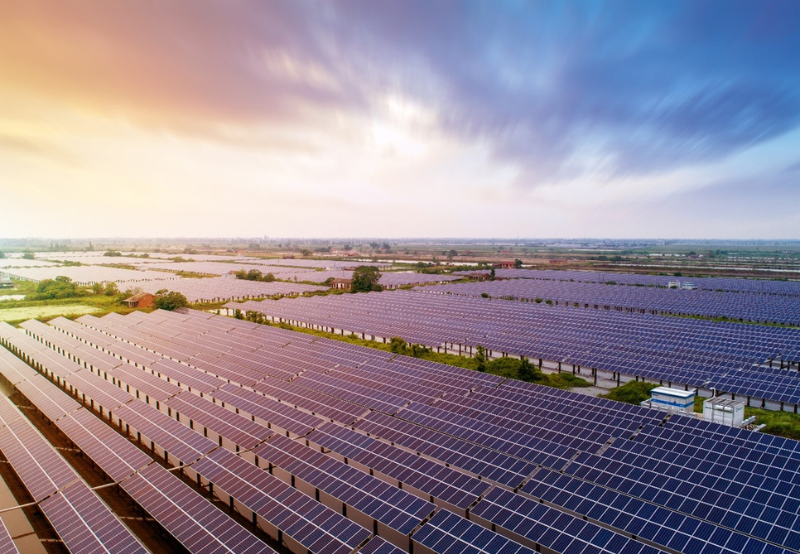
A carbon credit represents a quantified reduction or avoidance of greenhouse gas emissions. That reduction does not occur in a registry or exchange. It occurs on site, through assets that operate daily for years.
In practice, credible carbon credits originate from projects such as:
- Grid-connected and captive renewable energy systems
- Methane capture and destruction facilities
- Industrial efficiency upgrades
- Carefully designed nature-based interventions
If a project does not deliver verifiable, long-term performance, no amount of certification can compensate for that weakness later.
Where Integrity Is Actually Decided (And Why This Stage Is Often Rushed)
In real-world project work, the most decisive phase occurs long before credits are issued.
Critical questions must be answered honestly:
- What is the true baseline scenario?
- Would this project exist without carbon finance?
- Is the chosen technology reliable over decades?
- Can performance be monitored without manipulation?
From experience, projects that over-promise at this stage almost always create downstream problems — ranging from underperformance to credibility loss.
This is why engineering discipline matters more than paperwork.
The Role of Auditors: Necessary, But Often Misunderstood
Independent auditors play a vital role in the ecosystem, but their responsibility is often overstated.
Auditors:
- Verify reported data
- Check methodology compliance
- Validate monitoring systems
What they cannot do is fix a poorly designed project.
In practice, verification confirms reality — it does not create it. This distinction is essential when assessing credit quality.
Registries and Standards: Structure Without Impact Creation
Standards and registries exist to:
- Certify eligible projects
- Issue credits
- Ensure traceability
- Prevent double counting
They provide structure and transparency, which are necessary for scale. However, they do not influence how well a project performs on the ground.
This is why strong governance must begin before registry engagement, not after.
Markets, Exchanges, and Brokers: Amplifiers of Quality — or Risk
Markets improve access and liquidity, but they also magnify systemic weaknesses.
In practice, many carbon market challenges stem from:
- Aggressive crediting assumptions
- Limited buyer scrutiny
- Oversupply of low-quality credits
- Policy uncertainty across jurisdictions
Markets don’t inherently destroy trust — they expose what they are fed.
Why Renewable Energy Projects Offer a Stronger Foundation
From an engineering and operational standpoint, renewable energy projects — when designed conservatively — offer several advantages:
- Emission reductions are directly measurable
- Technology performance is predictable
- Monitoring is continuous and auditable
- Projects align naturally with grid decarbonisation
This makes them one of the most defensible project categories within carbon markets — provided quality is prioritised over volume.
The Human Dimension: Why Communities Matter More Than Reports
Projects that ignore local participation rarely sustain legitimacy.
In practice, long-term success depends on:
- Community engagement
- Transparent benefit sharing
- Local capacity building
Without these, even technically sound projects face resistance, reputational risk, and operational instability.
What High-Integrity Carbon Ecosystems Require in Reality
Across credible projects, common patterns emerge:
- Conservative engineering assumptions
- Transparent performance monitoring
- Disciplined buyers focused on quality
- Clear accountability across stakeholders
Carbon credits work best when treated as a financing support mechanism, not a substitute for real decarbonization.
Final Reflection
Carbon credits are neither inherently good nor bad. They are tools.
Their effectiveness depends entirely on how honestly projects are designed, implemented, and monitored over time.
As practitioners in renewable energy learn quickly, integrity cannot be added later — it must be engineered from the start.
Download the Visual Guide
To complement this explanation, you can download our Carbon Credit Ecosystem visual guide (PDF), which simplifies the entire flow into a clear, decision-ready format.